 on 5 September 2026
 Support Request Management in DoliPlus
DoliPlus support requests allow you to record, track and resolve your customers’ queries. This means you can manage your after-sales service, incidents and troubleshooting all in one place.
What is the support request module for?
The Ticket module records your customers’ support requests. These can come in by phone or via a web interface.
You then communicate with the customer by message or email. Crucially, every exchange and every step is logged in a journal. This gives you a complete audit trail from initial contact through to resolution.
A status flag tracks the entire lifecycle of the request. Additionally, a designated person is assigned to handle the case.
Finally, the module links to service management and customer asset tracking. This lets you trigger a service call directly from the ticket, specifying the equipment involved and its service contract.
Using the support request module
Once activated, a new Ticket menu appears in DoliPlus.
Create a ticket from a call or email
In the creation form, you simply enter the subject, a description and the ticket classification.
Create a ticket from the public web interface
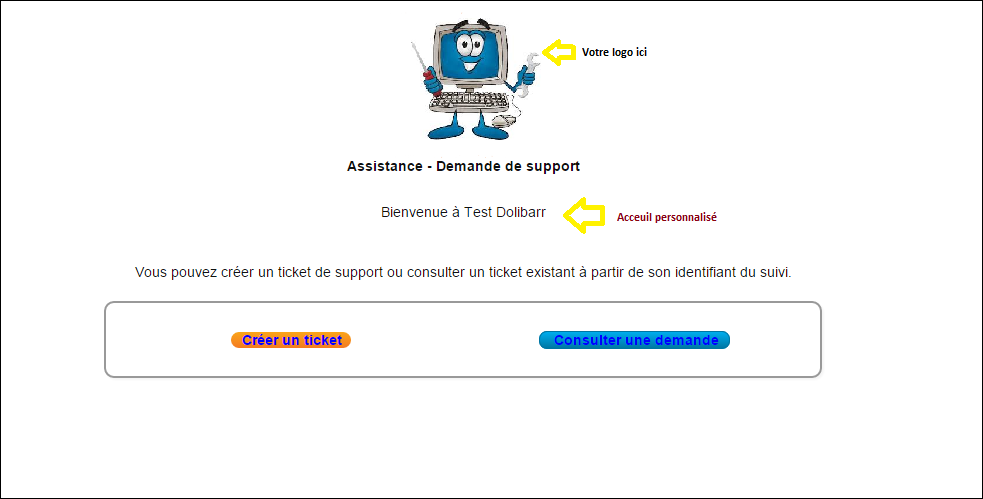
DoliPlus also provides a public web interface to collect customer requests. Be sure to inform your customers about this in advance.
From the “Tickets” tab in the customer record, you can then:
- view the customer’s ticket history;
- create a new ticket;
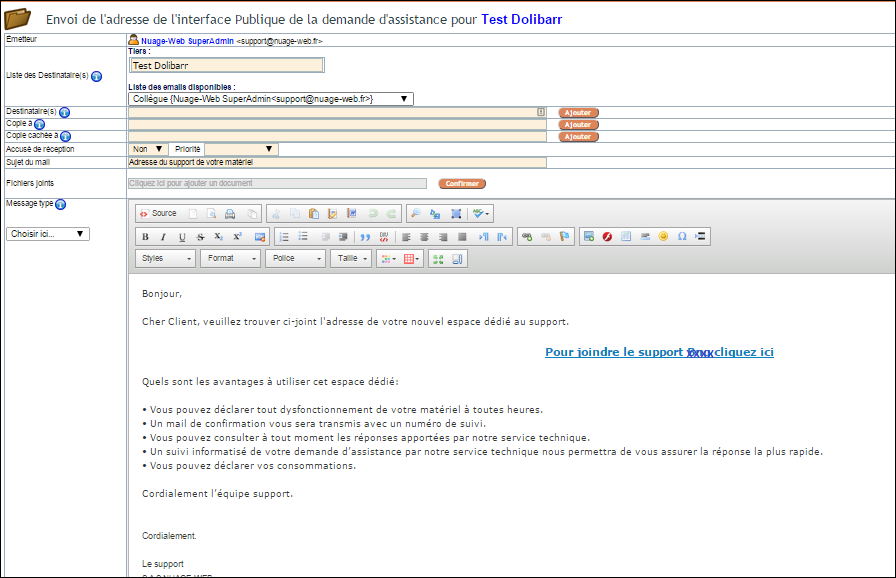
- share a personalised and secure link to the support interface, which automatically recognises the customer.
Note: If you can’t send a personalised link, an anonymous link remains available. In this case, an email address is required. Moreover, if DoliPlus recognises it, the system automatically identifies the customer.
Ticket properties
Each ticket contains multiple pieces of information:
- a tracking ID for public consultation;
- subject and description;
- classification (type, category, severity), configurable via dictionaries;
- status and key dates (creation, read, closure);
- author and assigned user;
- associated customer;
- progress and duration, calculated from linked service calls.
Ticket statuses
The ticket follows a clear cycle: Unread → Read → Assigned → Closed → Deleted.
Every action is recorded in the history. You can also add messages, which are saved and displayed on the record.
Link the ticket to your other modules
The ticket is not isolated. You can easily link it to your other activities:
- create a quote directly from the ticket;
- if the Intervention module is active, create a linked service record;
- assign equipment from your inventory, including its service contract;
- finally, create an event attached to the ticket.
These links allow DoliPlus to automatically calculate the ticket duration based on time logged for interventions.
Ticket record and document library
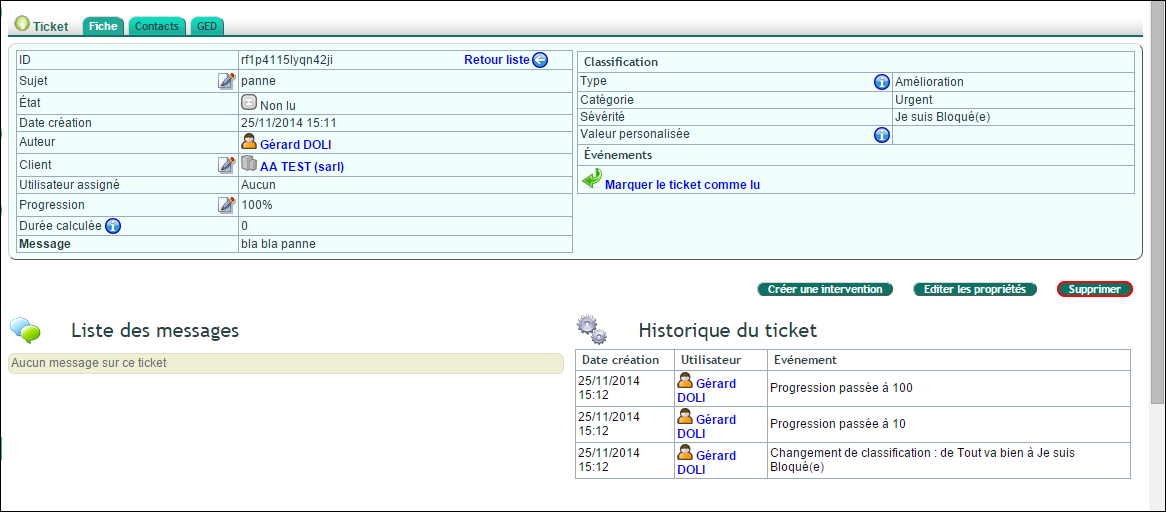
The record displays all information and available actions. A document library is also linked to the ticket, so files uploaded by the customer are automatically stored there.
Messages and history
Add messages to the ticket, displayed newest to oldest like a forum. Internal users can also email a message by simply ticking a box.
The history tracks key actions: viewing, assignment, status changes and closure.
List and statistics
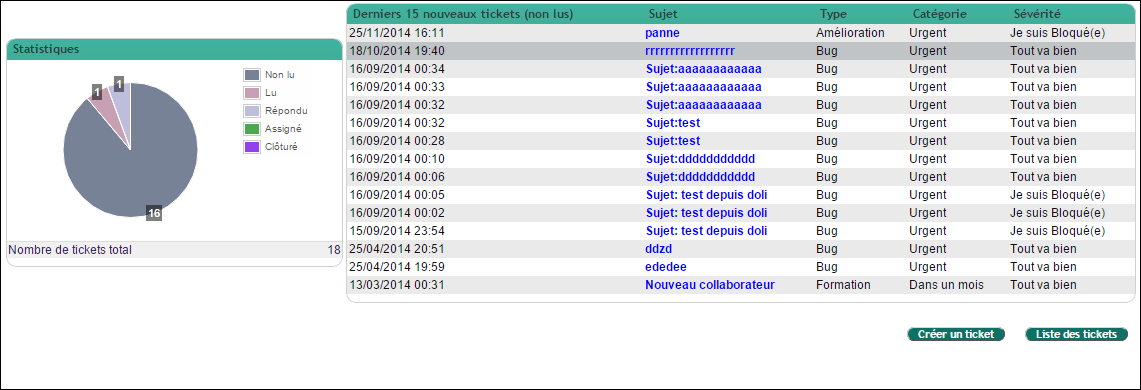
The ticket list can be sorted by status, severity or category. Search by company or subject. The dashboard also shows a chart of tickets by status.
Notifications
When a public ticket is created, DoliPlus emails the customer with a direct link.
With the Notification module, you can designate user groups to be alerted about new tickets or messages.

Configuring the support request module
Configuration is accessible from the record or admin console.
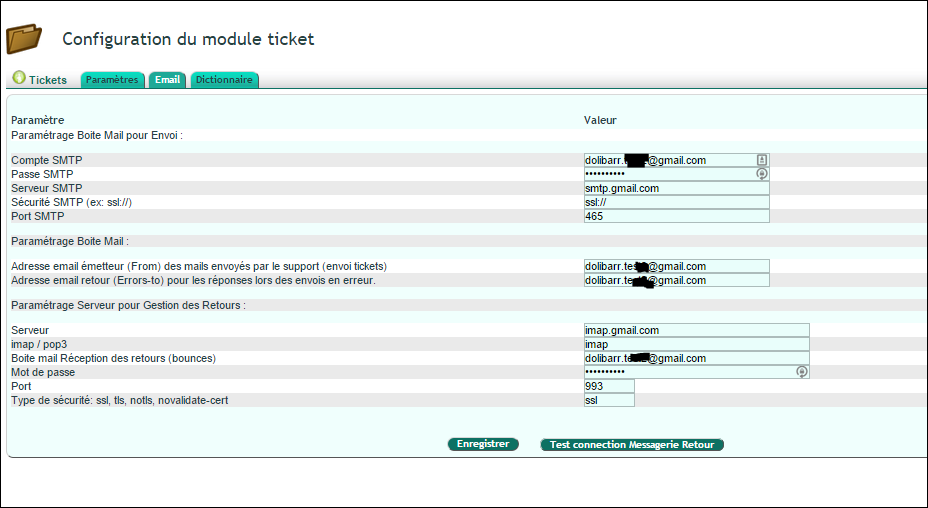
Email tab
Designate a dedicated mailbox (e.g. support@yourcompany.com) to standardise communications. This uses DoliPlus’ built-in email system with SSL/TLS encryption.
Dictionary tab
First configure the three main lists: type, category and severity.
Custom fields then let you enhance both the internal form and public interface. The IN group applies to internal forms, the OUT group to the public interface. Sharing rules allow some fields to be used in both.
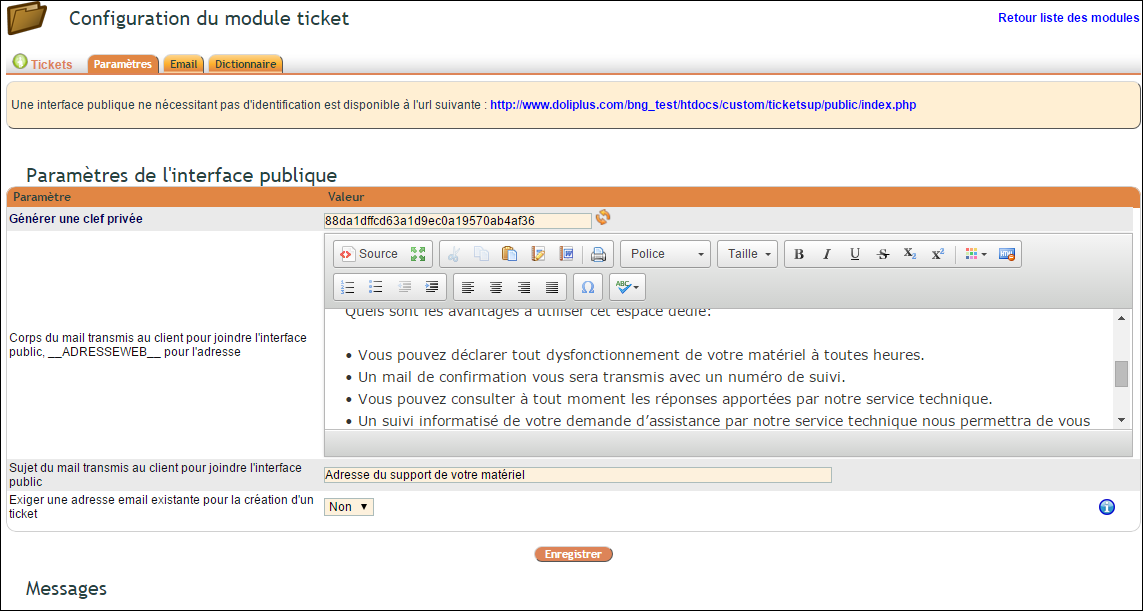
Settings tab
This tab combines multiple settings: client interface links, conversation messages and public interface text. Default template messages are provided and can be customised.
Next steps
- How to request support in my Dolibarr + DoliPlus application — how to ask us for help from your application.
- Mobile support requests: report and track issues — report problems from your mobile and track resolutions.
- Browser maintenance — browser maintenance, often the cause before DoliPlus.
